
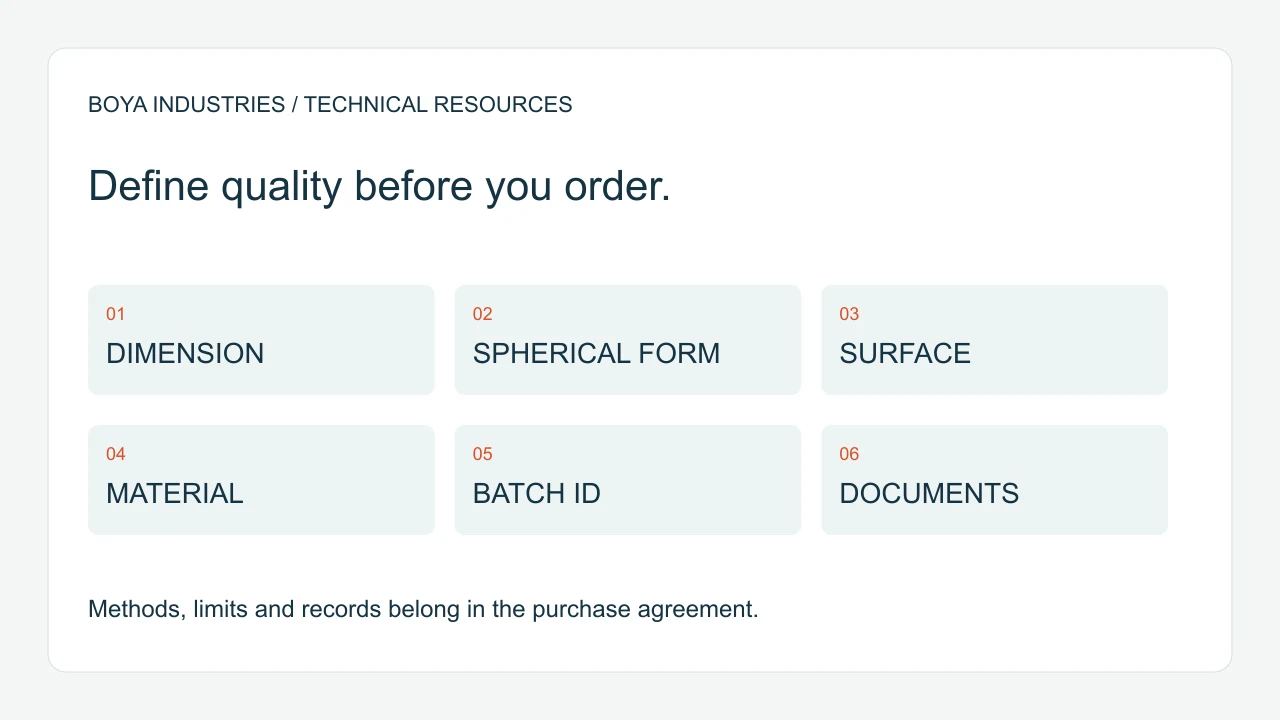
Quality requirements are an important part of precision steel ball procurement.
For bearing manufacturers and industrial buyers, selecting a material and precision grade is only the beginning.
The purchasing specification should also define how relevant quality characteristics will be evaluated and documented.
A clear inspection plan helps buyers and suppliers establish consistent expectations before shipment.
1. Dimensional Inspection
The nominal diameter is one of the first characteristics buyers specify.
However, finished precision steel balls are also evaluated against dimensional variation requirements.
Inspection should use equipment and methods suitable for the required precision.
For higher-precision applications, a simple general-purpose measurement tool may not be sufficient to demonstrate all applicable requirements.
The inspection method should be agreed upon for the product and grade.
2. Spherical Form
Deviation from spherical form is an important characteristic of finished precision steel balls.
Depending on the inspection requirement, suitable measurement equipment may be used to evaluate geometric characteristics.
The applicable acceptance limits should come from the specified standard or an agreed customer specification.
3. Surface Quality
Surface quality is important in steel ball procurement.
Buyers may need to consider:
- Surface roughness
- Visible defects
- Scratches or dents
- Corrosion or surface contamination
- Special appearance requirements
The required surface inspection approach should be agreed upon with the supplier.
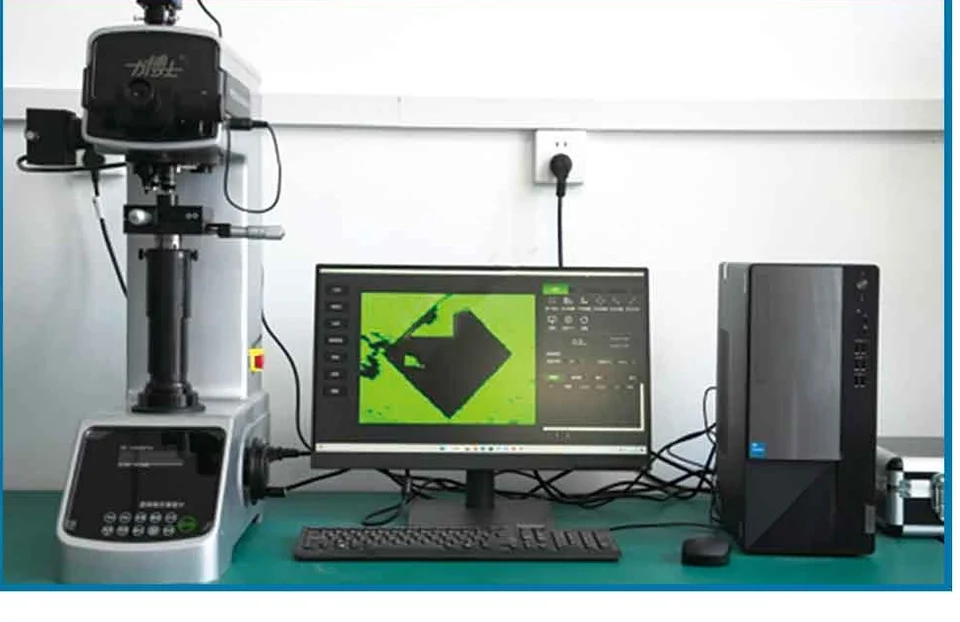
4. Material and Heat Treatment
For chrome bearing steel balls, the material specification should be confirmed separately from the dimensional grade.
Depending on the application and purchase agreement, relevant checks or documentation may concern:
- Material identity
- Chemical composition
- Hardness
- Heat treatment
- Metallurgical characteristics
Not every order requires every test.
The correct inspection scope depends on the customer’s engineering and contractual requirements.
5. Batch Identification and Documentation
Traceability and documentation can become important for repeat orders and demanding industrial applications.
Depending on agreed requirements, documentation may include:
- Material certificates
- Dimensional inspection reports
- Batch or lot identification
- Relevant test results
- Packaging and shipment records
Buyers should request any mandatory documents before confirming an order.
The presence of a certificate alone should not replace reviewing whether the actual product meets the applicable specification.
6. Supplier Communication Before Shipment
Before approving a supply arrangement, buyers should confirm:
- The applicable standard and revision
- Inspection characteristics and acceptance criteria
- Sampling and inspection methods
- Required documents
- Packaging and batch labeling
- Procedures for addressing nonconforming products
A clearly documented agreement helps both parties understand the expected delivery requirements.
How BOYA Industries Supports Quality Coordination
BOYA Industries works with experienced manufacturing partners in China.
Our sourcing services include technical specification communication, coordination of agreed quality requirements, and export supply support.
Specific inspection reports and testing requirements should be confirmed during the RFQ process.
Learn more about our G10 Chrome Steel Balls.
Contact us with your specifications, quantity, and documentation requirements for a sourcing discussion.
Related purchasing guides
prepare a complete steel ball RFQ