
Precision steel balls are commonly specified in both metric and imperial dimensions.
International buyers often encounter inch-based nominal sizes alongside rounded millimeter values in supplier catalogs.
Although converting between units is straightforward, the way a nominal diameter is written can create purchasing misunderstandings.
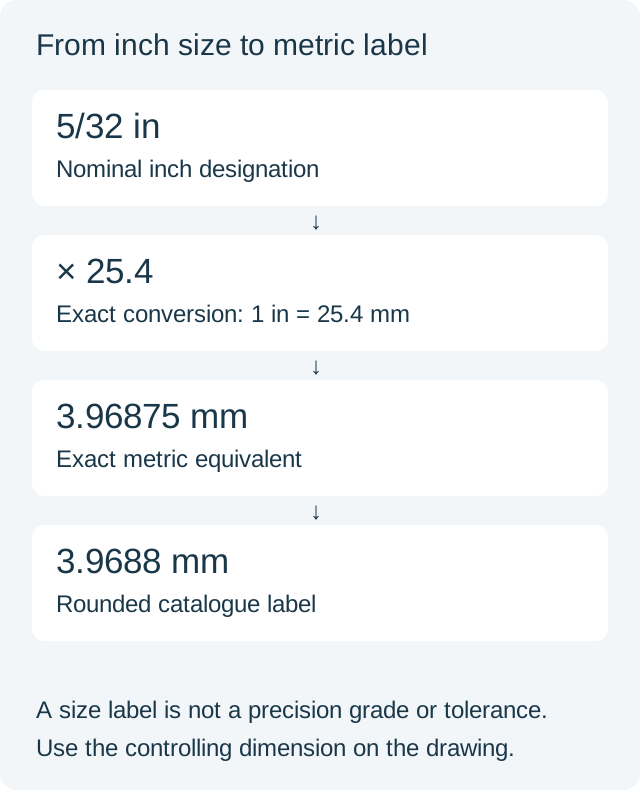
For precision applications, it is important to distinguish between an exact unit conversion and a rounded catalog display value.
Common Steel Ball Size Conversions
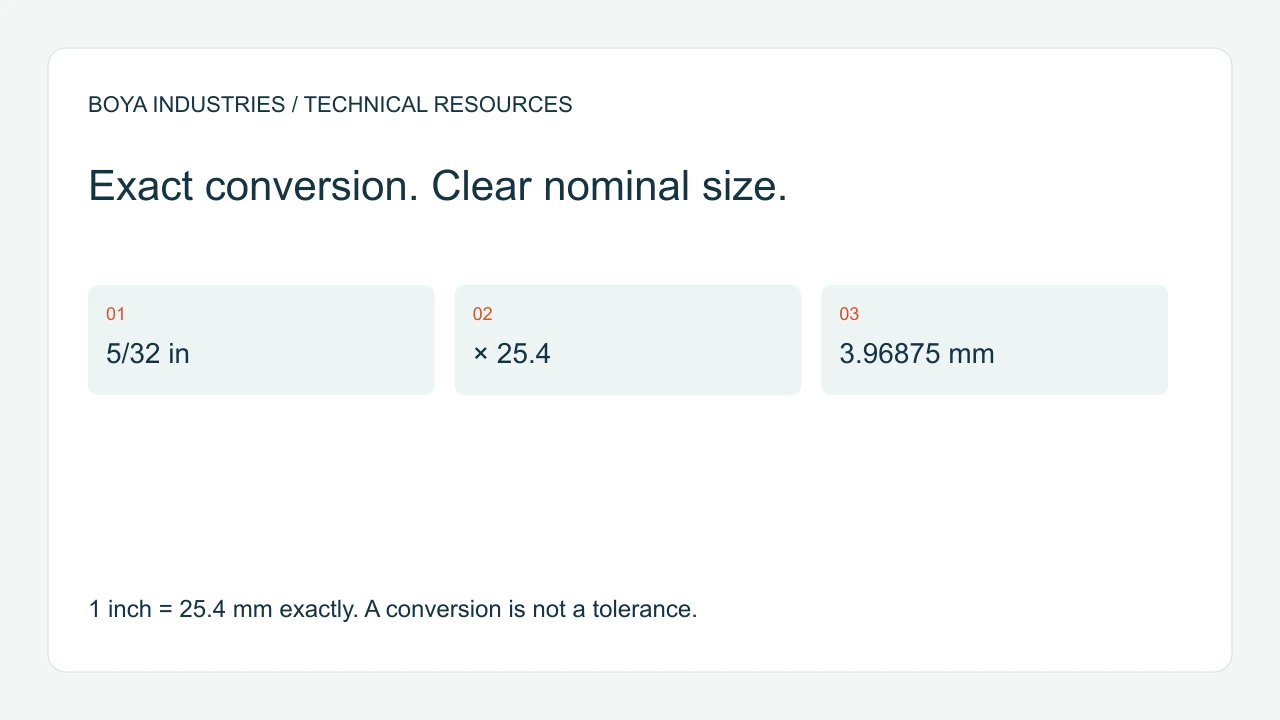
The exact relationship is:
1 inch = 25.4 mm
Some frequently encountered nominal sizes include:
| Inch Size | Exact Metric Equivalent |
|---|---|
| 1/8 inch | 3.175 mm |
| 5/32 inch | 3.96875 mm |
| 3/16 inch | 4.7625 mm |
| 1/4 inch | 6.35 mm |
| 5/16 inch | 7.9375 mm |
| 3/8 inch | 9.525 mm |
These are mathematical conversions of nominal inch sizes, not statements of allowable manufacturing tolerances.
Why Rounded Catalog Values Need Attention
A supplier catalog might display 5/32 inch as 3.969 mm.
Likewise:
3/16 inch may appear as 4.763 mm.
5/16 inch may appear as 7.938 mm.
These are rounded display values of the corresponding exact inch conversions.
A buyer should not assume that a rounded value automatically defines a different nominal metric specification.
If the application requires an exact inch-based nominal dimension, retain that designation in the RFQ.
If a separate metric nominal dimension is required, specify it explicitly.
Precision Grade Does Not Replace Nominal Size
A steel ball grade such as G10 describes precision requirements for the finished ball under the applicable standard.
It does not replace the need to specify the correct nominal diameter.
An accurate purchase specification should identify both:
- The nominal diameter and unit
- The precision grade and applicable standard
Material designation and inspection requirements should also be specified independently.
How to Write a Clear Diameter Specification
A clear inquiry may state:
Nominal Diameter: 5/32 inch (exact conversion: 3.96875 mm)
Precision Grade: G10
Material: AISI 52100 or another approved bearing steel designation
Applicable Standard: ISO 3290-1:2014
The actual order should also identify quantity, inspection requirements, and any customer-specific conditions.
Avoiding Common Ordering Mistakes
Before ordering steel balls, check the following:
Confirm the Original Unit
Was the design originally specified in inches or millimeters?
Keep the Nominal Size Consistent
Do not change the contractual nominal diameter simply because a supplier catalog shows a rounded conversion.
Separate Size and Precision Requirements
Nominal diameter and precision grade serve different purposes.
Agree on the Applicable Standard
The relevant standard defines technical requirements that cannot be determined from a nominal diameter alone.
Review the Quotation Carefully
Confirm that the supplier has quoted the intended nominal size, material, precision grade, and quantity.
Request Precision Steel Balls from BOYA Industries
BOYA Industries supports international buyers sourcing precision chrome steel balls and related bearing components.
We work with manufacturing partners in China to coordinate product specifications, sourcing requirements, and export supply.
Explore our G10 Chrome Steel Balls.
Send us the exact nominal diameter, unit, material, precision grade, quantity, and inspection requirements for your next RFQ.
BOYA’s three featured sizes
Our featured chrome steel ball sizes are 5/32 inch, 3/16 inch and 1/4 inch. The 5/16 inch example above is an additional conversion, not a replacement for the featured 1/4 inch size. Other diameters within 0.50–82.55 mm can be custom ordered. Use the size and weight chart for the full reference table and quantity estimator.
Related purchasing guides
prepare a complete steel ball RFQ